Wednesday, September 23, 2009

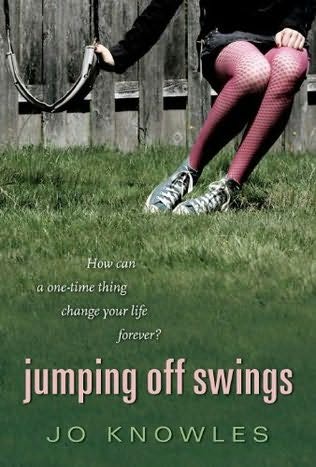
Jumping Off Swings by Jo Knowles


Jo Knowles' newest YA novel sensitively and tenderly explores the repercussions of teen pregnancy among four friends.

In a starred review, Publishers Weekly said "Absorbing from first page to last, this sensitively written novel explores how a teenager's crisis rocks her life as well as the lives of others. "

We're delighted to welcome Jo Knowles to the YA Authors Cafe!


Melissa W: Tell us about your book, Jumping Off Swings.

I always do a lousy job at describing my books, so here’s my publisher’s description:

“Ellie remembers how the boys kissed her. Touched her. How they begged for more. And when she gave it to them, she felt loved. For awhile anyway. So when Josh, an eager virgin with a troubled home life, leads her from a party to the backseat of his van, Ellie follows. But their "one-time thing" is far from perfect: Ellie gets pregnant. Josh reacts with shame and heartbreak, while their confidantes, Caleb and Corinne, deal with their own complex swirl of emotions. No matter what Ellie chooses, all four teenagers will be forced to grow up a little faster as a result. Told alternately from each character’s point of view, this deeply insightful novel explores the aftershocks of the biggest decision of one fragile girl’s life — and the realities of leaving innocence behind.”

I know that’s totally cheating and I am sorry. But really that’s much better than I would’ve done. :-)

Melissa W: Summaries are tough! I always say if I could tell the story in a hundred words, I wouldn't have taken up two hundred pages!Do you remember writing the first words? Are they still the same?

The words aren’t the same but the scene is quite close. In early drafts, Ellie’s chapters were all written in free verse. I decided to change that form when it became too restricting for what I wanted to say and needed to accomplish with her chapters.

Melissa W: What is the hardest part of writing for you?

I think it’s different for every book. But with the last two manuscripts (PEARL, which is coming out with Henry Holt in 2011, and my current work-in-progress), it was getting that first draft DONE and then realizing one of the reasons it was so hard to finish was that I’d chosen the wrong tense to write it in. For both novels, I scrapped the entire manuscript and started from scratch. This actually happened with LESSONS FROM A DEAD GIRL too. I’m hoping it’s not my “process” because WOW, that is a very inefficient way to write! However, I will say that it helps me to rethink the story, to get closer to it somehow, to hear it in a new voice. And that has been extremely helpful.

Melissa W: What are you working on now?

My next novel is called PEARL and it’s set to come out in Spring ’11 with Henry Holt. It’s about a girl who lives with her mom and grandfather and what happens when her grandfather dies and family secrets are unleashed. There’s also a lot about friendship, mother-daughter relationships, love and row-boat rides in a smelly river.

Melissa W: Have you ever wanted to quit writing? Why?

I don’t think it was a questions of wanting to quit, but rather a question of whether I should quit. Just before I sold my first book, LESSONS FROM A DEAD GIRL, I was reaching the point of lots of close calls but no offers. I’d been with my agent for a while and kept thinking any day now he was going to drop me and I wouldn’t blame him. I think at some point, you just start to think, Well, I know I came close but I guess I just don’t have what it takes. But let me tell all you writers out there that this is the WORST thing to think because if you are having close calls, it means you are SO CLOSE to getting THE call. The only sure way to fail is to give up. So just stick it out. Keep writing. Keep getting better. Keep getting your best work out there. Sometimes, you just have to wait for the stars to align exactly right. Seriously. There is a lot of luck involved in this crazy business. But there is also a lot of heart and bravery and believing in yourself and the characters you love. Don’t give up on them and don’t give up on yourself.

Very true and wise. Thanks so much for stopping by the Cafe, Jo!

For more information on Jo and her books, please visit her website.

As a regular part of our interviews, featured authors will pop back in for one week after their interview is posted to answer any other questions blog readers may leave for them. So if you have any questions or comments for Jo, please feel free to post away in the comments!

Wednesday, August 19, 2009

LIVING ON IMPULSE by Cara Haycak


Cara Haycak started her writing career at Columbia University’s graduate writing program and received an MFA in 1995.

Her first YA novel, Red Palms was awarded a Work-in-Progress grant from the Society of Children’s Book Writers and Illustrators in 2000, and was published in 2004 by Random House Children’s Books/Wendy Lamb Books.

Dutton Children’s Books will publish her second novel for young adults, Living on Impulse, on August 20, 2009. She lives in Los Angeles, with her husband and young son.

Booklist calls Living on Impulse ". . . stirring, smart, and affirming read."

And Publisher’s Weekly says, "Haycak creates a realistic portrait of a teenage girl whose life is spiraling out of control . . . With painstaking yet gratifying care, Haycak eventually starts Mia along the path of self-realization and forgiveness."


Please join me in welcoming Cara Haycak to the YA Authors Cafe!


Mary: Tell us about your newest book, Living on Impulse.

Cara: It’s about a 15-year-old girl named Mia, a high-school sophomore growing up in a college town in upstate New York, who has a bit of trouble controlling her impulses. When she gets caught shoplifting, her mother gives her an ultimatum—get a job and pay off your debts or else you’ll be out your own.

Mia takes an unusual route. She winds up accepting a job in the university’s entomology department…breeding flies.

On a deeper level, this a story about metamorphosis…Mia’s. She’s completely transformed as we read about her, and in a way that one might not expect. It’s not beauty or perfection that inspires her, but its opposite—an ugly white worm, a horribly dysfunctional family—it’s the harsher realities which show her how fragile yet tremendous the world can be.

And the idea of a cocooning is central to the story, too. Mia is forced to enter a cocoon of her own as everything familiar is torn away in the first half of the book: Her friends desert her, her family breaks down, even her sense of self is shaken to the core. And so, in order to emerge as an adult she must build a new life in the dark and by herself, using truth and passion—and most importantly, her instinct for risky impulses—as her guiding forces.

Mary: Do you remember writing the first words?  Are they still the same?

Cara: This book started as a short story that was published in Cicada Magazine, many years ago. That story opens with a scene of Mia shoplifting, and so does the book. The only difference between them is a change of tense…in the book, the opening paragraphs are written in the present tense.

"In early April, Mia hits the department store downtown on the Commons…"

Mary: Was there any part that you struggled with or avoided writing?

Cara: You bet. I wanted this girl to be a troubled and troublesome character. I wanted her acting out in ways that weren’t so pretty. She’s not always nice, she’s not always thoughtful, and she definitely makes some big mistakes.

But I didn’t want her to be an unlikeable character. I found out this is hard to do. I didn’t want teens to write her off, or think she wasn’t worth their time.

Sometimes I could walk this fine line by editing a bit to temper her behavior. Sometimes I could pump up the volume on the thing that triggers her to act out, so the reader can understand why she’s reacting badly. Sometimes I just let her be angry, and do what she’s got to do.

Ultimately, I’m hoping that teens will relate to her because of her dark side.
 
Mary: Tell us something about you that no one knows.

Cara: Since the heart of the story takes place in the entomology lab of the local university, where Mia works breeding flies, it seems important to mention that I did this same job between my junior and senior years of college at Cornells.

Like Mia, I was unsure of what I wanted to do when I graduated. I thought about studying law, which meant I had to take the LSATs, but I’m a terrible test taker. So I decided to stay at school for the summer, do the Stanley Kaplan course and test before the fall semester buried me in other studies.

I worked hard and the night before the exam, I decided to prepare a healthy and delicious dinner. I bought fresh scallops, grilled them, and immediately got food poisoning. I spent the whole night on the floor of the bathroom.

I missed the test, of course. And I never became a lawyer. But I did get to write about the fly lab, so I know that all the things we go through (the negative as well as the positive) are useful experiences. Especially, if what we really want to do is make art. It’s a choice that ultimately seems right for the character, Mia, too.

Mary: What is the hardest part of writing for you?

Cara: First draft. It kills me. I may know exactly what I want to write, and I’ll have the outline sitting there next to me, but getting it on paper feels like I’m literally pulling the gray matter of my brain out between my ears.

Mary: I can totally relate to that! I think I’ve lost a bit of gray matter that way myself! How did you become a writer?

Cara: I chose an obvious way, and went to graduate school for an MFA in Creative Writing (Columbia University, 1995).

But I think storytelling intrigued me starting with watching Bugs Bunny cartoons when I was a kid growing up in the 1960’s. I loved all the Looney Tunes, but Bugs, in particular, blew me away. He was funny and irreverent, but he also had this amazing ability to control events as they were happening. You know, if the hunter has his shotgun aimed down your rabbit hole…well, then you just pull on it, and stretch it, then send it out a new rabbit hole and aim it back at his butt.

I really liked how Bugs was able to create the world he inhabited…and that he could make it work the way he wanted it to. That seemed to be a superpower.

And when writing is going well, I get to experience some of that. I think that’s the thrill for me.

Mary: I loved Bugs Bunny for all those reasons! He never lost his cool. What were you like as a teen?

Cara: See answer above, referencing Bugs Bunny. Rebel Rebel.

Mary: What's on your nightstand right now?

Cara: A lovely YA novel called If I Stay, by Gayle Forman. I never want it to end. A girl lying in coma narrates it, but it’s not dreary or a downer. It’s the most life-affirming book, about our relationships to the people we love and how they make life worth living, and how sometimes those relationships can tear you apart. It’s going to be made into a film directed by Catherine Hardwick (Twilight). Gosh, I should be her agent, I’m talking it up so much. But this book has me by the throat.

I just finished reading Prodigal Summer by Barbara Kingsolver. I adored it. She is an inspiration for me…She can write about things in a way that is so detailed and knowledgeable, and yet it’s so accessible because she writes characters that you fall in love with. And boy, she really lets you get to know the place she’s writing about, as well.

I’m just starting Haruki Murakami’s, Kafka at the Shore. His books are so out there. I love that feeling I get reading his work…that anything could happen.

Mary: What do you do to "unblock" writer's block?

Cara: Ignore it. Does that sound trite? I mean to say that if I’ve got a project going, instead of letting inertia take hold, I force myself to sit down and write. It helps to have an outline, because then you have an assignment: "Today is the day I write the scene in which the girl argues with her mother about money," etc.

Sometimes it goes very slow. But I always work where other people are working. A café, a library. That way I don’t feel so isolated.

In between projects, I can get very very….not blocked, but dry. Like, there’s nothing left but a dribble of brackish water way way down in the well. So I read, and that becomes the first step toward writing, because at least I’m doing something with words that have been put together with much tender care. Or I may get an idea for how to handle something that’s been percolating in my mind about a new story.

But just as often I start to feel a bit competitive or challenged. Like the gauntlet has been thrown down… "Top this sentence, why don’t you?" Or, it might be a gentler prod… "Do you think you could write a book this good? Wanna try?"

Thanks so much for including me on YA Authors Café!

Mary: Thank you so much, Cara! I loved hearing about your book, process, and the rebellious cartoons of your life! Congratulations on the imminent release of Living on Impulse!


For more information about Cara and her books visit her website at http://www.carahaycak.com

Readers, now it’s your turn. Ask a question! Leave a comment. Cara will pop back in for one week to respond. You’re up!

Wednesday, August 5, 2009

Been dumped?

A new book is born!

THE COMEBACK by Marlene Perez

Congratulations, Marlene! And to celebrate, we are asking all of you out there to be brave and fess up--have you ever been dumped? Answer the questions at the bottom of the post. Yes, misery does love company.

And to sweeten the misery, three random posters will receive a free signed copy of The Comeback! (Isn't the cover gorgeous?) Here is a little snip of what it's about:

Sophie Donnelly is one half of the most popular and powerful couple in school, until new girl Angie Vogel shows up and compromises everything. Angie steals Sophie's starring role in the school play, and, worse, her super-popular boyfriend. Sophie has been quickly dispatched to social Siberia, but not for long--she'll do anything it takes to make a triumphant comeback.


The Book Muncher says: "There's something undeniably endearing about her character despite her all-consuming and sometimes desperate desire to be the top of the social food chain. It's probably because all of us have felt some degree of Sophie's jealousy before."

You got that right!

So here are your questions:

1. Have you ever been dumped?
2. What did you do?
3. How long did it take you to get over it?
4. Looking back now, was it for the best?

Brave Bonus question:

5. Have you ever been the dumper? Did you feel bad?

Let's hear it!

****************************************************************************
The posters who have won the random drawing for a signed copy of THE COMEBACK are jpetroroy, MotherReader, and Alissa.
Please e-mail Marlene at marlene@marleneperez.com with your snail mail address to receive your prize.

Wednesday, July 15, 2009

Project Sweet Life by Brent Hartinger


BRENT HARTINGER is the author of many books for teenagers, including Geography Club, The Last Chance Texaco, Grand & Humble, and Project Sweet Life. Brent's book honors include being named a Book Sense 76 Pick (four times) and the winner of the Scandiuzzi Children’s Book Award, the Lambda Literary Award, and the Judy Blume Grant for Best Young Adult Novel.

Also a playwright and a screenwriter, Brent has several scripts under option and in the process of studio or network development, including a film version of his novel, Geography Club.

Brent teaches writing on the faculty at Vermont College in the MFA program in Writing for Children and Young Adults. He lives in Seattle with Michael Jensen, his partner since 1992.

Brent writes regularly on gay entertainment for AfterElton.com, and founded and now edits a fantasy-themed website, TheTorchOnline.com. Visit Brent's author website at www.brenthartinger.com.

Reviews for Project Sweet Life:

"A hilarious story filled with mishaps, close calls, and outrageous adventures....the novel will be especially appealing to middle school boys."
-- School Library Journal

"The boys’ friendship, lightly and expertly depicted, drives the book, while their smartly plotted moneymaking schemes are creative, highjinks-filled, and hilariously almost effective."
-- Horn Book Review

"Marked by sly wit and a certain old-fashioned jauntiness, this tale of three chums on a quest for indolence strikes many a wish-fulfillment fancy...Hartinger blends urban legend with the actual history of Tacoma’s routing of its Chinese community (author’s note included) to craft an irresistible setting (who wouldn’t want to explore lost tunnels under a city in search of treasure?), humorous episodes tinged with mild danger, and a light-hearted mystery"
-- BCCB

Marlene P:What was your inspiration for this story?

Brent: Project Sweet Life is about three 15 year-old boys who are told by their dads to get jobs -- "because work builds character!" But they've always been told that age 16, not age 15, is the year that you're required to get that first "summer job," so they were all counting on having one last summer of job-less freedom to share together. They don't feel they're dads' demand is fair.

So, seeking to preserve one last golden "job-less" summer, they invent "fake" jobs to satisfy their dads, and then embark on a series of "get-rich-quick" schemes in order to make the money they should be making from working. But getting rich quick is more difficult than they think!

The inspiration? Well, it was very, very much the way my friends and I felt when we were teenagers: we took "summer freedom" very seriously. As we got older, we worked, of course, but the way we saw it, we'd worked hard all year long, and we'd work hard for the rest of our lives, so there was nothing wrong with taking some time off in the summer and enjoying ourselves. We were only going to be young once! Work hard and play hard.

Ironically, just as in the book, I'm convinced that playing hard, at least the way we did, builds far more "character" than if we'd worked at KFC all summer.

Marlene P: Do you remember writing the first words? Are they still the same?

Brent: What an interesting question!

I had to check this. This first words are:

"Dave," my dad said at dinner, "it's time you got yourself a summer job."

And yup, they were the words right from the beginning. I have a tendency to jump right into things, and you can see that the book's central problem is right there at the start.

Marlene P: What kind of research did you have to do for this story?

Brent: Interestingly, the very first inspiration for the book, even before I knew the story, was a true story I'd heard as I child: how my hometown of Tacoma, Washington, rounded up all its Chinese residents back in the 19th century, burned down Chinatown, and forced all the residents out of town and on a train down to Oregon. It was an historical event that ended up being called the "Tacoma Method" for a city's dealing with its immigrant population, and even today, over a hundred years later, Tacoma has a very small Chinese American population (not surprisingly).

I've been haunted by the story all my life. Can you imagine? Having your home burned down and being told to just leave? "Go away -- you and your whole community are not wanted here"?

As I got older and became a writer, I knew I wanted to write about it. But I didn't trust myself to write a historical novel or a literary novel -- I'm not a particular fan of either genre as a reader, and I'm a big believer that you should write the kind of book you love.

Anyway, Project Sweet Life is my attempt to write about this chilling historical event. I admit it's a "light," very round-about attempt! But there ends up being a treasure, and a big mystery that the kid attempt to solve, and it involves the expulsion of the Chinese, and the tunnels the Chinese supposedly dug under the city.

I'd like to think there's also a lesson about racism and historical accuracy in there somewhere.

And yes, I did a lot of research! I talked to town historians and read lots of local books. The best part was trying to find evidence of those actual tunnels -- which I sort of did. Do they really exist? I honestly think they do, but I can say no more -- I've been sworn to secrecy!

Marlene P: Which books influenced you most when you were growing up?

Brent: It's funny, because this book was very much inspired by the kinds of books I loved and read over and over again when I was a kid. Which were books like The Mad Scientists' Club, The Great Brain, The Chronicles of Narnia. Basically, stories about kids who go on pretty crazy, often "episodic" adventures, usually involving mysteries, but -- as I sort of mentioned above -- also end up discovering some important things about themselves and the world.

A lot of reviewers have commented on the "old-fashioned" nature of the story (in a good way!), which makes me happy, because that's exactly what I had intended: just a good, old-fashioned, somewhat outrageous, somewhat wacky comedy of errors -- but with contemporary characters and a more contemporary feel.

~~~Cafe Note~~ As a regular part of our interviews, featured authors will pop back in for one week after their interview is posted to answer any other questions blog readers may leave for them. So if you have any questions or comments for Brent, please post them now.

Tuesday, July 7, 2009

And the winners are:

Grand Prize winner:
Bissie


Four (4) First Prize winners :
DVE
Erin
Jen
Summer


Please e-mail me (Marlene) at marlene@marleneperez.com for details on how to collect your prize.

Tuesday, June 16, 2009

Suite Scarlett by Maureen Johnson Contest


We're having a contest!Please check out the video below and tell us one thing about Scarlett. You can also enter a second time by naming at least two other novels that Maureen Johnson has written. At the end of the week, posters will be chosen at random to receive the prizes!

One (1) Grand Prize winner will receive:
$50 Gift Card to PBteen®
Suite Scarlett paperback book


Four (4) First Prize winners will receive:
Suite Scarlett paperback book

Suite Scarlett Synopsis

When Scarlett Martin turns fifteen she is put in charge of the Empire Suite, one of the rooms in her family’s hotel. Enter Mrs. Amberson, an aging C-list starlet who decides to employ Scarlett. Soon, she is taking dictation, running around New York City, and getting caught up in Mrs. Amberson’s crazy adventures. In the midst of it all, Scarlett falls in love–or so she thinks–and it takes Mrs. Amberson to help her see the light. Now available in paperback!


Don't forget to leave your comments on the YA Authors Cafe blog in order to be eligible to win! And find out more about PBteen at www.pbteen.com and more about Maureen's books at www.thisispoint.com.

Tuesday, May 26, 2009

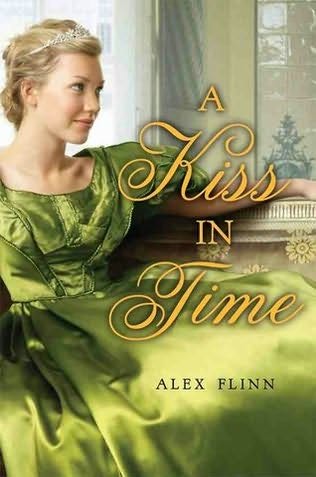
A Kiss in Time by Alex Flinn


Talia fell under a spell . . . . Jack broke the curse.

I was told to beware the accursed spindle, but it was so enchanting, so hypnotic. . . .

I was looking for a little adventure the day I ditched my tour group. But finding a comatose town, with a hot-looking chick asleep in it, was so not what I had in mind.

I awakened in the same place but in another time—to a stranger's soft kiss.

I couldn't help kissing her. Sometimes you just have to kiss someone. I didn't know this would happen.

Now I am in dire trouble because my father, the king, says I have brought ruin upon our country. I have no choice but to run away with this commoner!

Now I'm stuck with a bratty princess and a trunk full of her jewels. . . . The good news: My parents will freak!

Think you have dating issues? Try locking lips with a snoozing stunner who turns out to be 316 years old. Can a kiss transcend all—even time?

Alex Flinn brings a new twist to an old tale. Her novel Beastly is being made into a major motion picture starring Vanessa Hudgens. We're thrilled she stopped by the Cafe for a chat!

Melissa W: How gorgeous is that cover? Tell us about your book, A Kiss in Time.

Alex: Sleeping Beauty in South Beach. It's about Talia, who is almost 16 circa 1700, and who is not supposed to touch spindles . . . but she does and falls asleep, along with her entire kingdom. It's also about Jack, who is on an uber-boring European tour. He gets tired of visiting the Museum of Napoleon's Nose Hair and watching the tour guide walk backwards, so he ditches the tour and looks for the beach. Instead, he finds a sleeping kingdom and a really hot princess. His friend dares him to kiss her. She wakes . . . and that's when it gets hairy. Everyone's mad at Talia for touching the spindle and messing things up. They're also furious at Jack for kissing the princess. You're not supposed to do that. So they throw him in the dungeon. Talia, meanwhile, wants out, so she offers to spring him if he'll take him with her . . . to Miami.


Melissa W: What was your inspiration for this story?

Alex: It never seemed right to me that Sleeping Beauty is awakened by a prince she doesn't know, a hundred or so years later, and lives "happily ever after." How would you be happy, in a new century whose customs you don't know, and married to a stranger? The thought reminded me of Rip Van Winkle, or the musical, Brigadoon, and I was off, bringing Sleeping Beauty to my world.


Melissa W: Do you remember writing the first words? Are they still the same?

Alex: The story came to me in a gush as I was trying to revise another book (I never did). I wrote the first 50 pages very quickly and was happy not to have to go back to that other novel that wasn't working. Virtually everything about those 50 pages is the same.

Melissa W: Was there any part that you struggled with or avoided writing?

Alex: The ending was tough. The hero of the story must face a challenge, but
because of the modern setting, Jack couldn't face an actual dragon or other historical battle. And yet, because of the quasi-historical setting, a kidnapping at gunpoint didn't seem appropriate either. In the end, I thought of an appropriate magical climax that also reflected the humor of the novel.


Melissa W. What's on your nightstand right now?

Alex: Today, I finished reading Moloka'i by Alan Brennert. It's a historical novel set in a leper colony in the late 19th and early 20th century. Although it's not YA, it appealed to me as a young-adult reader because the main character is 6 when she contracts Hanson's disease and is ripped from her family and banished to the Hawaiian island of Moloka'i, and much of the novel takes place in her childhood and young-adult years. Because Rachel, the heroine, is taken to a group facility, it reminds me a lot of the British boarding school type of novels I've always liked, such as Jane Eyre, or Libba Bray's Gemma Doyle books.


Melissa W: If you could be anything else besides a writer, what would it be?

Alex: Probably a librarian. I've often thought I'd enjoy being a librarian or a school media specialist. I've come into contact with many good ones, and I think I'd enjoy working with teens and coming up with innovative programming ideas. I've often wished I'd come up with that prior to going to law school.


Melissa W: What are you working on now?

Alex: A story that is a melange of different fairy tales -- The Frog Prince, The Shoemaker and the Elves, The Six Swans, The Golden Bird, The Salad, The Magic Fish, and The Brave Little Tailor. It's about a shoe repair employee in a South Beach hotel, who is asked by a princess to complete a quest . . . for her brother, who has been turned into a frog and set loose in the Florida Keys.

I can't wait to see how you get all of that into one book! But for now, congratulations on A Kiss in Time and the Beastly movie!

~~~Cafe Note~~ As a regular part of our interviews, featured authors will pop back in for one week after their interview is posted to answer any other questions blog readers may leave for them. So if you have any questions or comments for Alex, please post them now.